The Question Is No Longer Whether You Need a WMS
For years, the warehouse decision was binary: spreadsheets or a WMS. That debate is settled: if your warehouse moves hundreds of SKUs, you need a system.
Today's question is different: is a traditional WMS enough, or do you need an AI-powered WMS?
The difference between the two is not an extra module or a marketing label. It is a difference in nature: one records, the other decides with you.
What Does a Traditional WMS Do?
A traditional WMS is a system of record. It does three things well:
- Records receipts, locations, movements and dispatches
- Organizes the warehouse: every product has an assigned position
- Reports stock: what you have and where it is (according to what was captured)
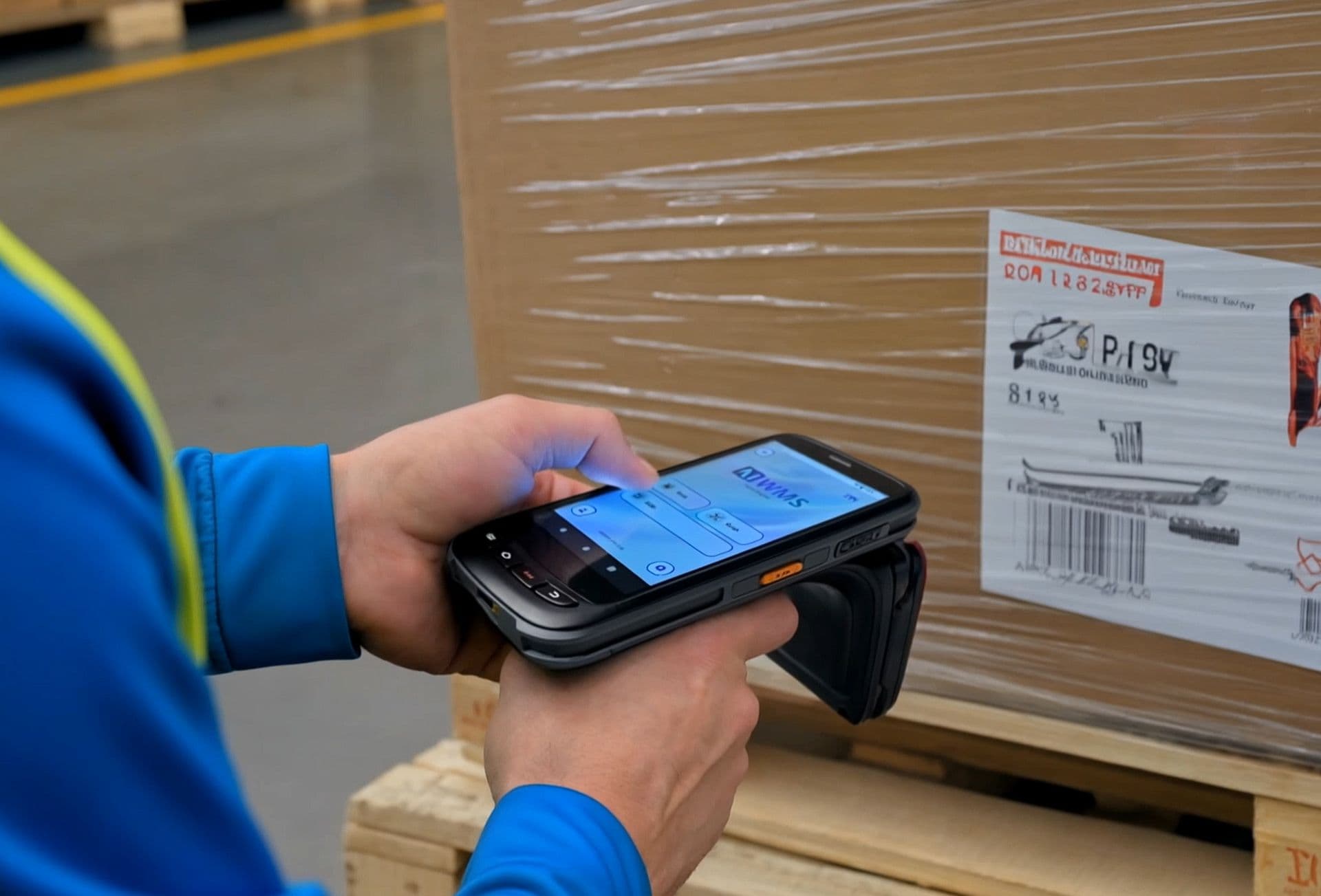
Its limit lives in the word "captured". A traditional WMS only knows what someone scanned or typed. If the operator does not scan a pallet, the system never sees it. If a transfer is logged two hours late, your inventory lived two hours in the past.
That is why, even with a WMS, many warehouses still run physical counts that stop the operation, still find gaps between theoretical and actual stock, and still discover expired product when it is already too late.
What Makes an AI WMS Different?
An AI WMS attacks the problem on two fronts: capture and decision.
1. Capture stops depending on people
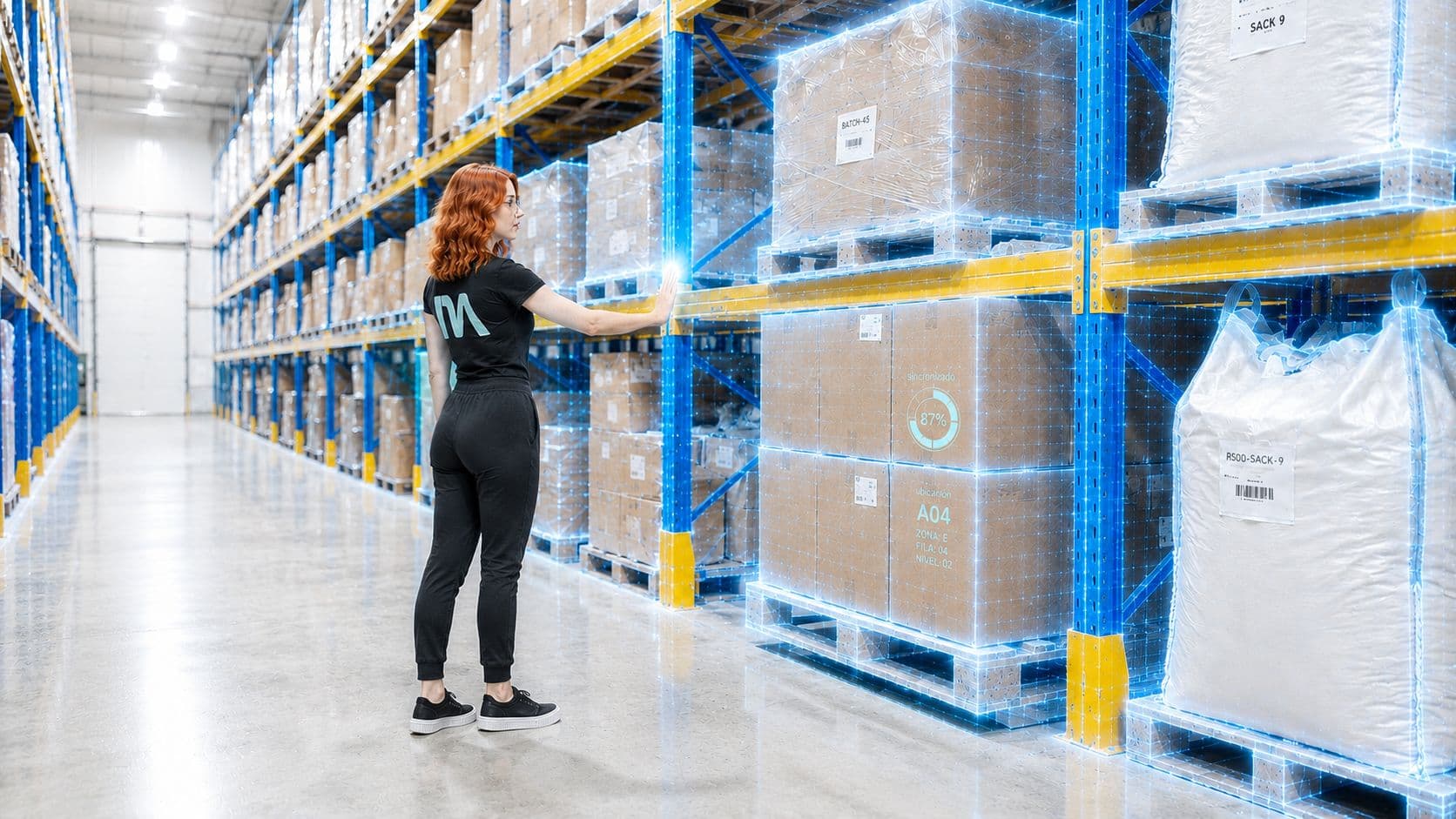
With RFID traceability, every pallet is uniquely identified and movements record themselves: receiving, transfers, picking and dispatch are written down with exact timestamps, without anyone pointing a scanner at each product. Inventory stops being a monthly snapshot and becomes live data, with reliability above 99%.
2. The system learns and suggests
This is where artificial intelligence comes in. Using the warehouse's own patterns, an AI WMS can:
- Suggest the optimal location for each pallet based on rotation, weight and demand
- Enforce FIFO: the oldest batch ships first, every time
- Anticipate expiration dates months in advance, not days: the alert arrives while you can still move, promote or return the product
- Measure how long each pallet stays and translate it into real storage cost
- Detect anomalies: unusual movements, gaps that do not add up, rotation that slows down
This is the category of AIWMS, Lyna's AI-powered WMS: automatic RFID traceability plus an intelligence layer that turns every movement into a better decision.
The Side-by-Side Comparison
| Criterion | Traditional WMS | AI WMS (AIWMS) |
|---|---|---|
| Data capture | Manual: scanning product by product | Automatic: RFID reads in bulk, at a distance |
| Inventory reliability | 80-95%, degrades between counts | Above 99%, continuous |
| Physical counts | Stop the operation, take days | Cycle counts without stopping the warehouse |
| Expiration dates | Checked by hand, caught late | Early alerts months in advance |
| Picking | The operator picks the pallet | Guaranteed FIFO: oldest batch ships first |
| Locations | Fixed rules defined once | Suggestions that learn from real rotation |
| Storage cost | Estimated globally | Measured per pallet, with exact dwell time |
| Role of the system | Records what happened | Anticipates what is coming and suggests what to do |
What If My Operation Is Small? Start Right From Day One
Let us be honest: you do not need to be a large corporation to operate with intelligence. AIWMS adapts to any size of operation: you can start with a small warehouse, a few zones and a few hundred SKUs, and the system grows with you to more buildings, more volume and more clients.
There is a well-known trap here: "spreadsheets are enough for now." Growing in disorder is expensive. Every month without traceability means inventory gaps, search time, expiration dates discovered too late and blind decisions. And the end of that story is almost always the same: the WMS gets implemented anyway, but forced, in a rush, and after the money has already been lost.
The real decision is not "do I need it?", it is when:
- Do it now: you save the losses along the way, you grow organized from the start, and you gain an edge over the companies still counting by hand.
- Do it later: you lose that money, you end up implementing it anyway, and you arrive at the same place without the advantage and with the bill for the disorder already paid.
Starting with the best tools is not a luxury for large operations. It is exactly what turns a small operation into a large one.
The Signals That It Is Already Urgent
The signals are clear and they almost always hurt in money:
- Theoretical inventory does not match physical counts and nobody can explain the gap
- You find expired or slow-moving product when there is no room left to react
- Physical counts stop the operation and still leave errors behind
- Your customers demand traceability: which batch shipped, when, who touched it
- The warehouse grows faster than the team managing it
- You operate for third parties (3PL) and need to prove accuracy per client
If you checked two or more, the conversation is no longer about software: it is about how much staying the same costs you every week.
The Real Cost of Staying a Generation Behind
A warehouse with a 5% inventory gap does not lose just 5%: it loses the sales of product that "was there" but nobody could find, the hours spent searching, the wrong shipments, the safety stock that compensates for distrust, and the capital frozen in product that expired in a corner.
The difference between the two generations is not paid in licenses. It is paid in inventory.
What the Move Looks Like in Practice
Moving to an AI WMS does not mean throwing away what you have or stopping the warehouse:
- Diagnosis: flows, zones, SKUs and real volumes are mapped
- RFID tagging: every pallet or container receives a unique identity
- Integration: the system connects with your ERP, no double data entry
- Zone-by-zone rollout: starting with receiving and dispatch, where the impact is immediate
- The AI learns: with the first weeks of data, suggestions tune themselves to your operation
If you want to understand the underlying technology in depth, we explain how an RFID WMS works.
The Honest Conclusion
A traditional WMS tells you what happened. An AI WMS tells you what is happening, what is about to happen and what to do about it.
If your warehouse is the heart of your business (producing, distributing or safeguarding third-party inventory), real-time visibility and assisted decisions are no longer a luxury. They are the difference between managing a warehouse and orchestrating it.